
Sought-after beans2 lots on offer ↓
Urrao sits high in Antioquia, where farmers grew a long-beaned tree they called Caturra Chiroso. It was no Caturra. Genetics places it among Ethiopian lines that reached Colombian soil and stayed.
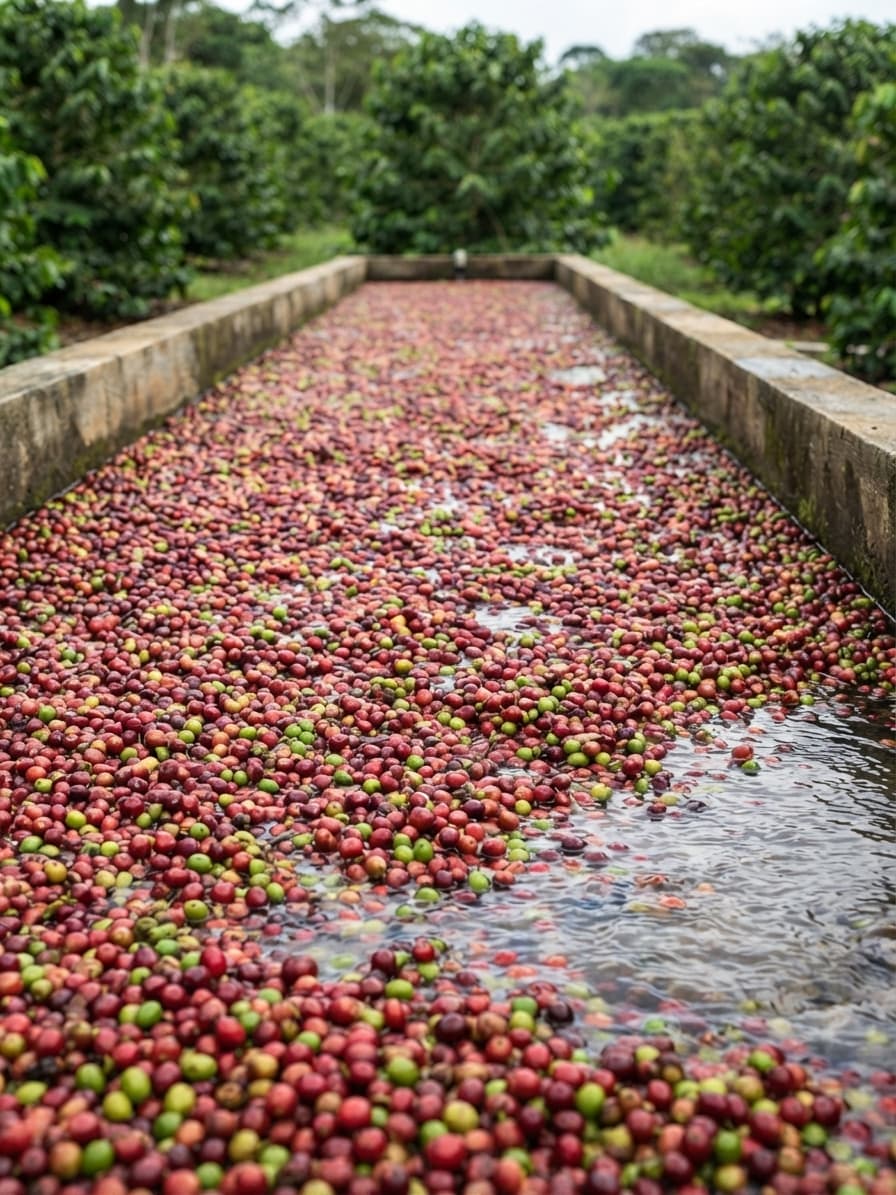
The trade learned its name in 2020, when a WashedDepulped within hours of picking, held in a tank until the mucilage loosens, washed clean and dried. The method Colombia built its name on.More → Chiroso took the national Cup of ExcellenceColombia's national green coffee competition and auction, held since 2005. Lots are cupped blind by national and international juries, and the scores are public.More →. A coffee inseparable from its place.
The evidence
Chiroso rests on firmer ground than most exotic Colombian names. Montagnon and colleagues published in Genetic Resources and Crop Evolution in 2021, reading microsatellite markers across 137 Arabica samples spanning Ethiopian accessions, worldwide cultivars and Yemeni germplasm. Chiroso fell inside an exclusively Ethiopian cluster, absent from the worldwide cultivated varieties: a landrace that left Ethiopia and kept going. The authors included it without knowing its Urrao name.
RD2 Vision reproduced the finding in 2023 on material from Carmen Montoya's farm. Two independent reads, one of them peer-reviewed, which is more than can be said for most of the varieties sold at this end of the market.
How it reached Antioquia is genuinely unknown. Pedro Miguel Echavarria of ParchmentThe papery husk around each green bean. Coffee is dried and stored in parchment, and hulled out of it shortly before export.More → puts it flatly: there has been no reliable research that explains it. The house would rather leave that blank than fill it with a story.
A group, not a variety
Work published in 2024 assembled complete chloroplast genomes for three distinct Urrao types: Caturra Chiroso, Bourbon Chiroso and Chiroso proper. Against twenty-six other Arabica varieties the group formed its own branch, with affinity to eastern Ethiopian landrace material.
That result carries a caveat worth stating. Chloroplast DNA passes down the maternal line only, so it establishes a shared mother, not full parentage. Separately, Lucas Cuadros has identified two Chiroso phenotypes in Urrao differing in cherry colour and leaf shape. Chiroso on a bag may be any of several related types, and the house says so rather than implying a single clean line.
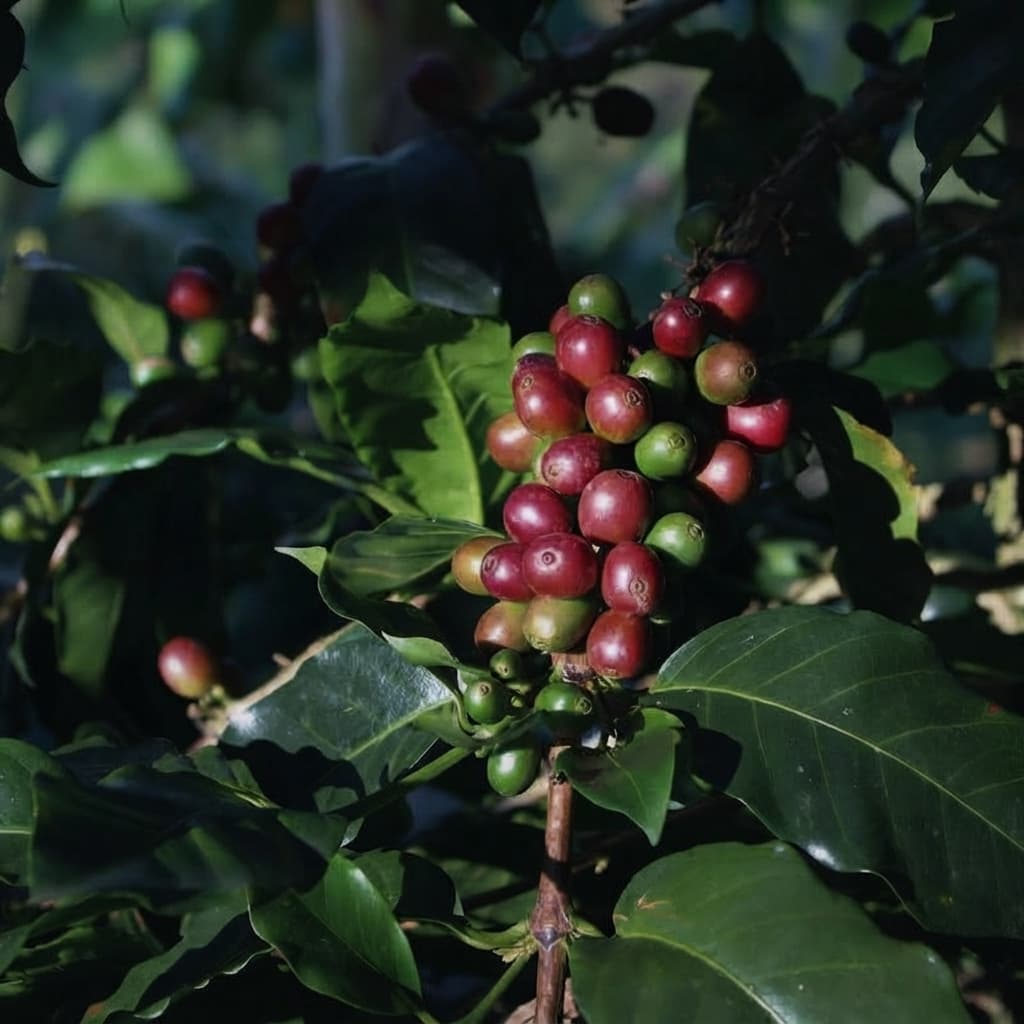
The name itself is rural Colombian slang for something elongated, after the bean and the cherry. Growers called it Caturra Chiroso on looks alone. The resemblance is real and the parentage is not.
What it does
In 2020 Felipe Henao Triana took first place in the Colombian Cup of Excellence with a washed Chiroso from Finca Los Tres Mosqueteros in Urrao, scoring 90.03 and collecting the only Presidential Award that year. Second, third and fourth were Gesha. Carmen Cecilia Montoya had already won the national competition with an Urrao Chiroso in 2014, which is the result that first drew attention to the valley.
It outperforms Castillo and Colombia at higher altitude and in cooler sites, which is the practical argument for planting it. Yield reports conflict: strong for a landrace type, below the modern bred varieties. Leaf rustHemileia vastatrix, la roya: the fungus that strips arabica of its leaves. Colombia's breeding programme exists to resist it, which is why Castillo and Tabi carry Timor Hybrid lines.More →. Volumes stay small.
2 Chiroso prize lots: NZ$62 to NZ$72 a kilo.
- Chiroso
- Other varieties
Source: Cup of Excellence, Stats NZ · 2023
- Alliance for Coffee Excellence, public results
- Stats NZ, CC BY 4.0
- FRED exchange rates, public domain
Prize lots: Cup of Excellence, Colombia's national competition, where the top-scoring green coffee beans are sold at an online auction. Winning bids in Colombia, before shipping, at each year's average exchange rate.
Everyday green coffee beans: the average value of green coffee beans imported into New Zealand from Colombia that year, with freight and insurance, before GST.